Do you ever face this problem as some fiber installers. “what actual protection does this give opposed to sub-duct/inner duct. I’ve been in many duct chambers where this has breached back and caused multiple blockage problems.”
In fact, without proper anchoring, any fabric solution can shunt. While we focus on manufacturing the high-tenacity fabric itself, SmartOSP is designed to be fully compatible with standard mechanical duct plugs and termination clips used in the UK/EU.
It’s definitely not a ‘one-size-fits-all’ product, but it remains a key ‘Plan B’ for contractors facing zero-space conduits where a re-dig isn’t an option. Respect your perspective as an industry veteran!
Why Using Fabric Innerduct?
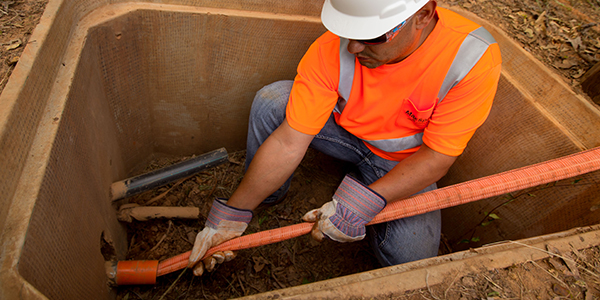
Fabric innerduct (like MaxCell) is designed to maximize conduit space, but as you’ve experienced, its flexibility is a double-edged sword. Unlike traditional rigid sub-duct, fabric innerduct can “bunch,” tear, or collapse if not managed correctly, leading to the blockages you’ve seen in manholes and duct chambers.
Here is a breakdown of how it compares to rigid sub-duct and how to mitigate those specific breach and blockage issues.
Fabric Innerduct vs. Rigid Sub-Duct: Protection Levels
| Feature | Fabric Innerduct (Flexible) | Rigid Sub-Duct (HDPE/PVC) |
| Mechanical Protection | Low. Susceptible to sharp edges, rodent damage, and “burn-through” from high-speed cable pulls. | High. Provides a hard physical barrier against external crushing and friction. |
| Space Efficiency | High. Can place 3 cables in a duct that would only fit 1 or 2 rigid sub-ducts. | Low. The wall thickness and “memory” (coiling) of rigid pipe waste significant space. |
| Tension Management | Conforms to the cable. If a breach occurs, the fabric can wrap around the cable, causing a “choke” point. | Maintains a fixed pathway. Even if breached, the rigid structure usually prevents a total blockage. |
Dealing with Breaches and Blockages
When fabric innerduct breaches—especially at the entrance or exit of a duct chamber—it often results from improper anchoring or over-tensioning. Here is how to address and prevent these problems:
1. Preventing “Bunching” at the Chamber
The most common cause of blockages is the fabric sliding into the main duct during a pull.
- Mechanical Termination: Always use specialized termination kits or conduit plugs designed for fabric duct. These lock the fabric to the rim of the main conduit, preventing it from being sucked back in.
- The “Slack” Rule: Ensure there is adequate slack in the chamber. If the fabric is under constant tension, any tear will cause it to snap back into the pipe like a rubber band, creating an immediate obstruction.
2. Managing “Burn-Through”
If a cable is pulled too fast or at a sharp angle, the friction can melt the fabric.
- Swivels and Lubrication: Use high-quality, water-based lubricants specifically rated for fabric.
- Pulling Tape: Ensure you are using a flat, lubricated pull tape rather than a standard rope, which acts like a saw against the fabric.
3. Clearing an Existing Blockage
If the fabric has already breached and caused a blockage:
- The “Push-Back” Method: If the fabric is bunched, using a rigid fiberglass duct rod (cobra) with a “ball” tip can sometimes push the fabric flat against the conduit wall long enough to bypass it.
- Split-Sleeve Repair: In accessible chambers where the fabric is torn, you can install a split conduit repair sleeve over the damaged section to provide the mechanical rigidity that the fabric is now missing.
4. Hardening the Entry Points
To prevent future breaches in high-traffic chambers:
- Bell Ends: Use bell ends on the main conduit to ensure the fabric isn’t being pulled across a sharp 90-degree plastic or concrete edge.
- Transition to Rigid: Some technicians prefer to transition from fabric to a short length of rigid sub-duct just at the chamber entrance/exit to provide better “armour” where the most movement occurs.
Summary for Fabric Maintenance
The “protection” offered by fabric is primarily organizational rather than structural. To stop the breaches you’re seeing, focus on anchoring the ends of the fabric more aggressively and using conduit sealing plugs that mechanically “clamp” the fabric against the inner wall of the main duct.