For Outside Plant (OSP) Project Managers, the “pathway” decision is just as critical as the fiber selection itself. Choosing between traditional conduit and flexible innerduct can dictate your project’s labor costs, speed of deployment, and future scalability.
While these terms are often used interchangeably, they serve distinct roles in a network’s physical architecture.
What is Innerduct?
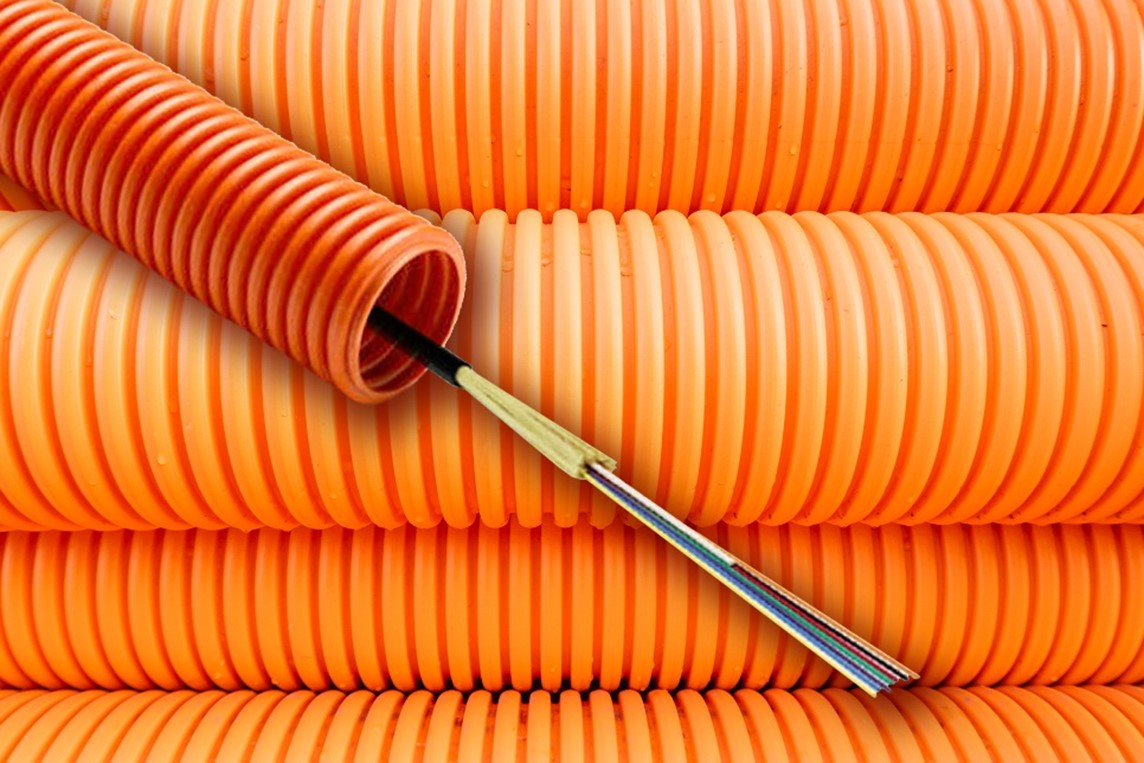
Innerduct is a flexible, non-metallic conduit—typically HDPE or PVC—installed inside larger existing conduits to subdivide them into smaller, protected pathways for fiber optic or communication cables. It acts as a protective, organized raceway, shielding cables from damage, environmental hazards, and simplifying future, high-density network upgrades.
What is Fabric Innerduct?
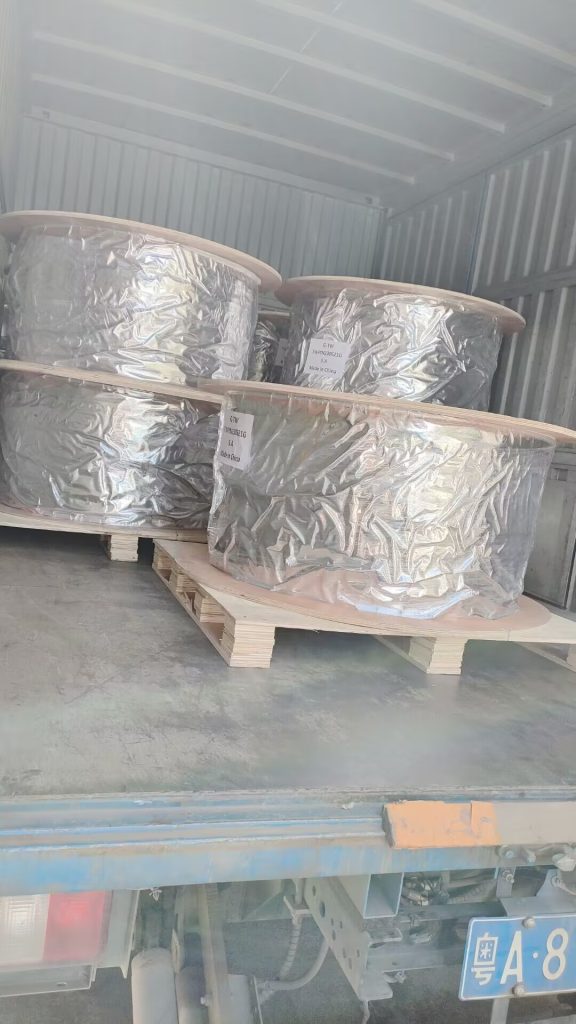
Fabric innerduct (often exemplified by products like MaxCell) is a flexible, textile-based cable management solution used to create sub-pathways inside existing rigid conduits. It maximizes conduit capacity by allowing more cables—such as fiber optic or copper—to be installed than traditional HDPE innerduct. Its flexible, woven design conforms to the shape of cables, reducing wasted space.
Understanding the Basics
1. Conduit: The Protective Shell
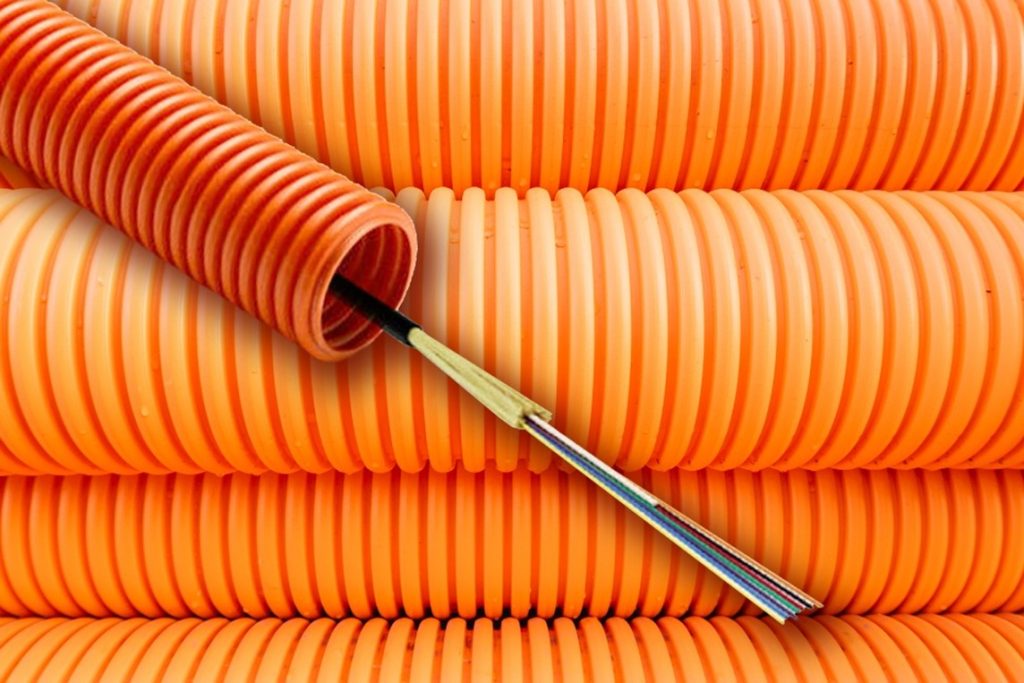
Conduit is the outer “pipe” (typically HDPE, PVC, or galvanized steel) buried underground or attached to structures. Its primary job is to provide a clear, protected path through the earth and shield cables from environmental damage, moisture, and accidental “dig-ups.”
- Key Benefit: Protection. It is the first line of defense against crushed cables or rodent damage.
- The Limitation: Once a conduit is filled with one or two large cables, the remaining space is often wasted due to “cable tangling” or friction, making future upgrades impossible without new trenching.
2. Innerduct: The Space Optimizer
Innerduct is a smaller pathway placed inside a larger conduit. Think of it as a sub-divider. By partitioning a 3″ or 4″ conduit into smaller channels, you can pull multiple cables through a single pipe without them intertwining.
- Key Benefit: Scalability. It allows for “incremental growth.” You can install one cable today and leave two empty cells for the next decade of expansion.
- The Limitation: It requires an existing (or new) conduit to reside in.
Comparison at a Glance
| Feature | External Conduit (HDPE/PVC) | Fabric Innerduct (Flexible) |
| Primary Role | Structural protection & path creation. | Volume optimization & friction reduction. |
| Installation | Requires trenching, boring, or plowing. | Pulled into existing conduits. |
| Space Usage | Fixed diameter; prone to “dead space.” | Conforms to cable shape; triples capacity. |
| Material | Rigid/Semi-rigid plastic or metal. | High-tenacity woven textile. |
| Best For | New builds, long-haul, and harsh soils. | Overcrowded ducts, MDUs, and Data Centers. |
How to Choose for Your Project
Scenario A: The Greenfield Build (New Construction)
If you are laying pipe where nothing exists, HDPE Conduit is your starting point. However, savvy OSP managers will install a fabric innerduct simultaneously. By doing this, you future-proof the trench, ensuring you won’t have to bore again when the ISP needs more capacity in three years.
Scenario B: The Congested Metro Area (Brownfield)
If your existing 4″ conduits are already “full” with two legacy cables, do not trench. This is where Flexible Innerduct shines. It can be “overridden” into the small gap remaining in an occupied duct, creating new paths where rigid pipes simply won’t fit.
Scenario C: Data Centers & Electrical Construction
In the high-density environment of a Data Center, space is money. Use Plenum-rated Innerduct to manage fiber runs in overhead trays. It keeps the cable plant organized and prevents the “spaghetti” mess that leads to cooling issues and maintenance headaches.
Introducing Shawn Fabric Innerduct: The Professional Alternative
For OSP projects requiring high-performance pathing without the “brand-name” markup, Shawn Fabric Innerduct provides a specialized solution for modern cabling infrastructure.
Designed for Outside Plant, Data Center, and Electrical applications, Shawn’s 3-cell textile design is engineered to reduce pulling tension by up to 30% compared to traditional HDPE sub-ducts.
Why OSP Managers are switching to Shawn Fabric Innerduct:
- Maximum Density: Fits up to three times more cable in your existing 3″ or 4″ conduits.
- Lower Pulling Tension: Integrated pull tapes and low-friction weave protect your fiber’s glass integrity during long-distance pulls.
- Project Readiness: With significantly shorter lead times than industry incumbents, Shawn helps you avoid project “stand-down” time.
- Versatile Design: Available in detectable versions for easy locating and various cell configurations (1-cell to 3-cell) to match your fiber counts.
Project Manager Tip: Before you sign off on a new trenching contract, audit your existing conduits. You might find that a simple pull of Shawn Fabric Innerduct saves you $50,000 in construction costs.